
Life Goes On, Bra
The story of Jimmy Scott, The Beatles and cultural appropriation in Soho


Standing on the dockside in Hull in 1948, cold and without money or even a change of clothes, he must have wondered whether his journey had been a mistake.
Around him was a city still in ruins. Hull had been one of the most heavily bombed places in Britain. Of its 92,000 houses, only 6,000 had escaped damage. More than 150,000 people were homeless. The dock itself — his point of arrival — had been a key target, destroyed in the Blitz of 1941. This was how twenty-six-year-old Nigerian Anonmuogharan Emuakpor arrived in Britain.
Migration from Nigeria in significant numbers began in the immediate post-war years, as the call went out across the empire to help rebuild “the home country”. Thousands paid for passage on liners running between West Africa and British ports. Others, unable to afford a ticket, took their chances as stowaways on passenger and cargo ships.
Anonmuogharan Emuakpor was one of them.
Not much is known about how he spent the next few years and ended up in London, but by the mid-fifties he was a regular around Soho’s jazz clubs. Somewhere along the way, Anonmuogharan Emuakpor became Jimmy Scott. He played congas for Edmundo Ros, a London based Trinidadian-Venezuelan bandleader with his popular Latin American orchestra. As a fellow musician later described him: “There really was an irrepressible good humour to the guy and he was fun to work with as he was always very excited about everything and had an incredible energy on stage where he would show up in full tribal regalia.”
As the Nigerian music historian The Jidé Taiwo explains, this fluency was no accident: “Growing up in the Urhobo swamps, it must have been second nature to him: people from that area of Nigeria are extremely musical and the percussion of the peoples of southern Nigeria on both sides of the Niger, is highly rhythmic.”
By 1964 he was a regular at the Flamingo Club, playing congas for resident band Georgie Fame and the Blue Flames. The following year he joined the touring band for Stevie Wonder’s first UK tour. He rapidly gained a reputation as a top session percussionist, and can be heard on The Rolling Stones Beggars Banquet album, and seen playing with them in the film of their 1969 Hyde Park performance.
Nigerians had been part of London life for over two centuries, initially as enslaved people. Their influence was profound. Olaudah Equiano’s 1789 memoir became one of the first widely read accounts of slavery in Britain, helping to shape the abolitionist movement.
Nigerians and those of Nigerian descent have made a huge contribution to music in Britain and, in particular, to the music culture of London. Skepta, Tinie Tempah, Dizzee Rascal and Dave are among those Grime artists with Nigerian parentage, as have more mainstream artists such as Seal and Sade. And Shirley Bassey belongs to a musical class of her own. As we explain in another story, Nigerian Fela Kuti - a pioneer of modern African music - lived in London as student and began his music career playing jazz and highlife at all-nighters in the Flamingo Club on Wardour Street.
The Bag
As a sought after percussionist, Jimmy Scott became a familiar face around the clubs, and one in particular.
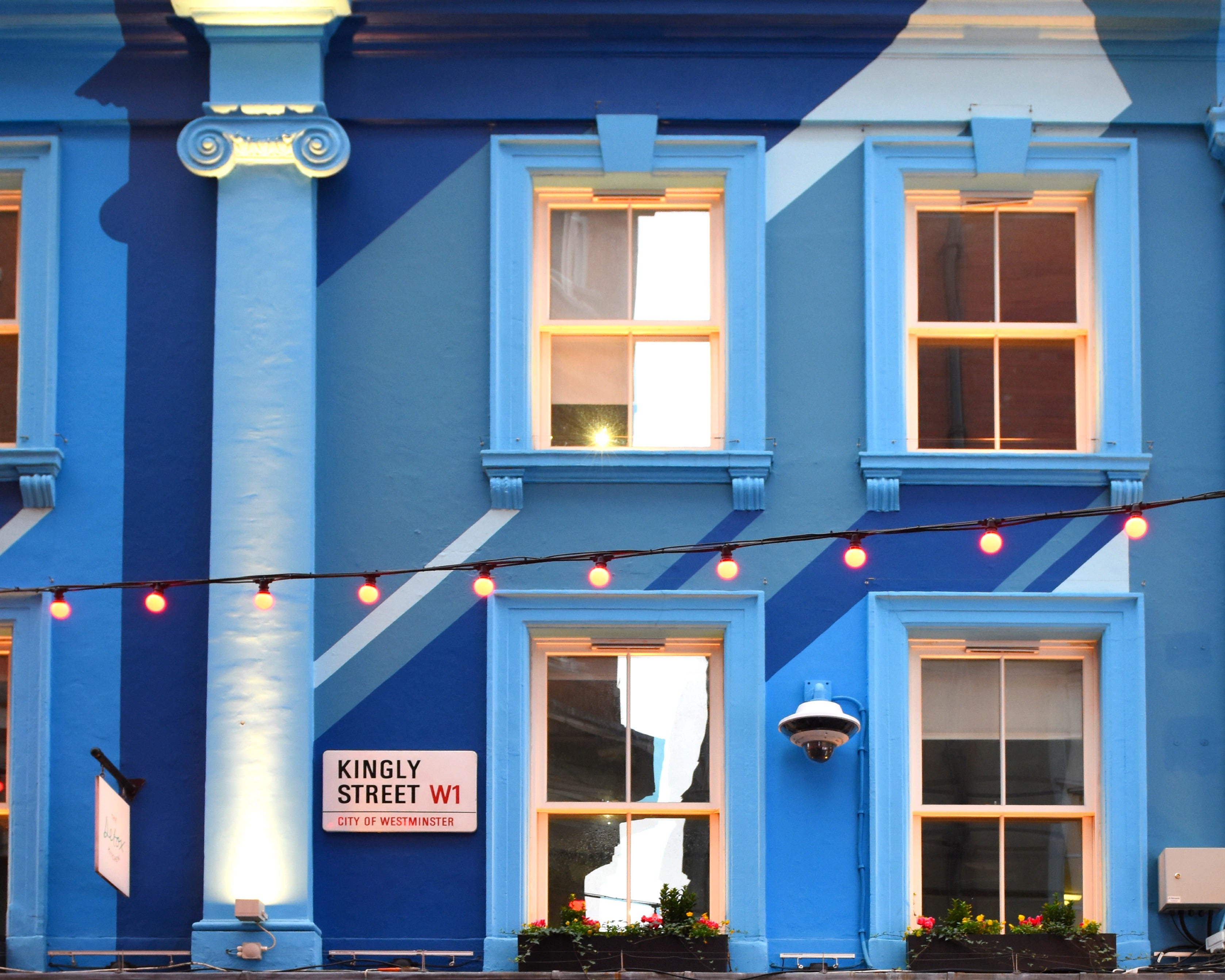
Squeezed between Regent Street and Carnaby Street, Kingly Street is more of an alleyway than a street, providing access for deliveries to the rear of Hamleys and Calvin Klein. Now a hub for fashionable restaurants and exclusive members’ clubs, many of the buildings date from the early eighteenth century. Their use over time reflects Soho’s economic ebb and flow from sought after residences to light manufacturing and workshops for a variety of trades. As Soho shifted to serving the needs of the leisure economy, so clubs began to take advantage of the street’s low-rent secluded basements.
Soho’s music clubs varied hugely in atmosphere and exclusivity. Some, like the Flamingo and Marquee, were open and crowded places, while others, like the intimate Bag O’Nails, were more hang outs for musicians. A club had occupied 9 Kingly Street since the 1920s, when Duke Ellington’s Quartet appeared there. But the club really hit its stride in the Sixties, as the NME reported in 1967:
“Swinging London has one club raving seven nights a week―the Bag O’Nails in Kingly Street, near Carnaby Street and just off Regent Street in London’s West End, and it’s one of the few places where one can still see London at its grooviest.”
On 11 January 1967 Jimi Hendrix and his band dropped in to the club for their first performance in the UK after a full day of recording. The audience included Paul McCartney and Ringo Starr, half of The Who, at least one Rolling Stone, Eric Clapton, Lulu, Georgie Fame and Donovan. It was that sort of club.
During 1968, The Beatles recorded many sessions for the White Album at Trident Studio, just a five minute walk away. They would work late into the evening, after which Paul McCartney, accompanied by long-term personal assistant Mal Evans and one or two others, would stroll over to the club for a bite to eat and a relaxed chat with whoever was there. It was during one of these late evenings that Paul met his future wife and collaborator Linda. And it was at the Bag O’Nails that Paul got to know Jimmy Scott:
“I had a friend called Jimmy Scott who was a Nigerian conga player, who I used to meet in the clubs in London. He had a few expressions, one of which was, ‘Ob la di ob la da, life goes on, bra’. I used to love this expression… He sounded like a philosopher to me. He was a great guy anyway and I said to him, ‘I really like that expression and I’m thinking of using it…”
Taking and making
It was a throwaway phrase in a Soho club. It would become one of the most recognisable choruses in popular music. Jimmy wanted a co-writer credit. McCartney refused, eventually making a payment to him on condition that he dropped his co-writer claim. Jimmy was hired to play congas on early takes of the song, but it was a recording that created friction — both between Jimmy and Paul and within The Beatles, with the rest of the band disliking the song, and in particular McCartney’s obsessive perfectionism in recording it. It took 48 takes to produce a version the band was happy with.
The early version featuring Jimmy Scott was not used until The Beatles’ Anthology was released in the 1990s. But the song was included on the 1968 ‘White Album’ and released as a single in many countries, climbing to number one in seven of them. A cover version by Marmalade got to number one in the UK.
This issue exposes a fault line, not just within the band, but within the culture that surrounded it.
Many of our stories describe Soho as a place of openness: a culture of exchange, where ideas flowed freely between clubs, studios and rehearsal rooms. And often that exchange was generous, collaborative, and creative.
But exchange is not a simple idea. It exists on a spectrum: from taking to making.
At one extreme lies outright appropriation. Paul Simon famously recorded Martin Carthy’s arrangement of Scarborough Fair, which he had heard at Les Cousins on Greek Street, and credited it to himself on the first Simon & Garfunkel album. The result was a falling out that lasted decades. As the Financial Times later reported, Carthy’s own publisher had, without his knowledge, copyrighted the arrangement and collected royalties from Simon. Carthy had effectively signed away his claim in the small print.
A little further along the spectrum is Bert Jansch, another regular at Les Cousins. Jimmy Page admired his playing deeply — so deeply that Led Zeppelin’s Black Mountain Side is, in essence, an uncredited version of Jansch’s Blackwaterside.
Closer to creative transformation, musicians began to treat riffs and phrases as shared material — elements to be reshaped into something new. Jimmy Page built parts of Led Zeppelin’s early sound from existing blues structures. The central guitar figure in Moby Dick draws heavily on Bobby Parker’s Watch Your Step. Four years earlier, John Lennon had used the same idea in I Feel Fine.
Sometimes the act of borrowing produced something entirely original. Ray Davies, trying to replicate the rhythm of Louie Louie, failed, and in that failure created You Really Got Me, one of the defining sounds of British rock, recorded just around the corner on Denmark Street.
Words, too, were borrowed. Lennon and McCartney lifted lines from a Victorian circus poster almost verbatim for For the Benefit of Mr Kite, and drew on a sixteenth-century poem for Golden Slumbers. Decades later, Karl Hyde of Underworld would construct the lyrics of Born Slippy from fragments of overheard conversation in The Ship on Wardour Street.
Overlaying all of this is a deeper question — one of power and cultural appropriation. Running through both American and British popular music is a persistent tension: who gets to take, and who gets recognised?
In a damning critique in 1970, Craig McGregor wrote in The New York Times that it was “white imitators, The Beatles, who exploited the black man’s music and finally betrayed it.” John Lennon, in response, acknowledged the debt but framed it as a “love in” rather than a “rip off”.
Chris Richards, writing in the Washington Post, sharpens the distinction. The question, he suggests, is not simply whether artists borrow, but how they do so. “When is cultural appropriation… ever acceptable in pop music?” he asks. The answer lies in the difference between travellers and tourists. Travellers participate. Tourists take.
One test, then, is whether artists transform what they borrow into something new, while acknowledging and respecting its origins. These questions have only become more pressing in an age where sampling technologies and global media allow anyone to draw on almost any sound, from anywhere.
A charming, irresistible man
So where does that leave Jimmy Scott?
Was he given sufficient credit? Was he treated with respect? From today’s perspective, it is difficult to argue that he was.
For us — two white Britons for whom The Beatles formed the soundtrack of our childhood — passing judgement on that moment is not straightforward. But the imbalance is hard to ignore. And in any case, far worse injustices were to follow.
In the 1970s, Scott played with the soul and funk band Maximum Breed, and recorded his own version of Ob-La-Di Ob-La-Da — an exuberant instrumental that showcases his remarkable playing. He also ran workshops on African music for the Pyramid Arts Project in east London, passing on the traditions that had shaped him.
In the early 1980s he joined the 2-tone band Bad Manners. Then, in 1986, after returning from a tour of the United States, he fell ill. According to band leader Doug “Buster Bloodvessel” Trendle:
“We’d just done this tour of America and he caught pneumonia. When he got back to Britain he was strip-searched at the airport because he was Nigerian. They left him naked for two hours. The next day he was taken into hospital and he died.”
A benefit concert was held to raise money for the two families and twelve children that he left, featuring Bad Manners along with Lee Scratch Perry and the Upsetters. As his widow Lurcrezia Scott said: “Jimmy was essentially a rhythmic, charming, irresistible man with the gift of the gab… If life was sometimes dull, it shouldn’t have been, for his stories of people, of places, of incidents, were an endless stream bubbling with fun.”
The music we enjoy draws on so many talents and sources of inspiration, and is full of borrowed phrases, lifted rhythms and shared ideas. Sometimes that exchange is creative and generous. Sometimes it isn’t: it’s more taking than making. Jimmy Scott’s story sits uncomfortably in that space. His words became a global hit. His playing shaped records we still revere. But his name remains largely absent from the story. Soho was built on exchange, but some exchanges were more equal than others. To remember Jimmy Scott is to recognise both the brilliance of that culture and the cost at which some of it was made. He was a singular talent and inspiration who deserves never to be forgotten.
This is one of many stories we will explore in our Beatles themed walking tour of Soho on 5 April 2026. For details go here.
Sources
Gavin Edwards (2015) “Beatles’ 5 Boldest Rip-Offs” Rolling Stone, 23/12/2015 https://www.rollingstone.com/music/music-news/beatles-5-boldest-rip-offs-54145/
David Honigmann (2020) “Scarborough Fair — the ancient ballad that sparked a modern-day grudge”, Financial Times, 10/08/2020 https://ig.ft.com/life-of-a-song/scarborough-fair.html
Craig McGregor (1970) “So in the End, The Beatles Have Proved False Prophets.” The New York Times, 14 June 1970, https://www.nytimes.com/1970/06/14/archives/music-so-in-the-end-the-beatles-have-proved-false-prophets.html
Marco On The Bass (2011) “The Life & Times of Jimmy Scott: From Inspiring The Beatles ‘Ob La Di Ob La Da’ to Playing Percussion With Bad Manners” http://marcoonthebass.blogspot.com/2011/05/life-times-of-jimmy-scott-from.html
Chris Richards (2018) “The Five Hardest Question in Pop Music”, Washington Post, 02/07/2018 https://www.washingtonpost.com/news/style/wp/2018/07/02/feature/separate-art-from-artist-cultural-appropriation/
Joe Taysom (2022) “The legendary guitarist Led Zeppelin’s Jimmy Page ripped off” Far Out Magazine, 11/03/2022 https://faroutmagazine.co.uk/guitarist-led-zeppelin-jimmy-page-ripped-off/
The Jidé Taiwo (2021) “Cheated By Paul McCartney And ‘Killed’ By British Immigration: The Unfulfilled Life Of Jimmy Scott Emuakpor”, History Made: The Newsletter, 15/11/2021
What an incredible story. So sad the way he died. I didn't know anything about him. I like "Bad Manners" so was interested to hear he played in the band.
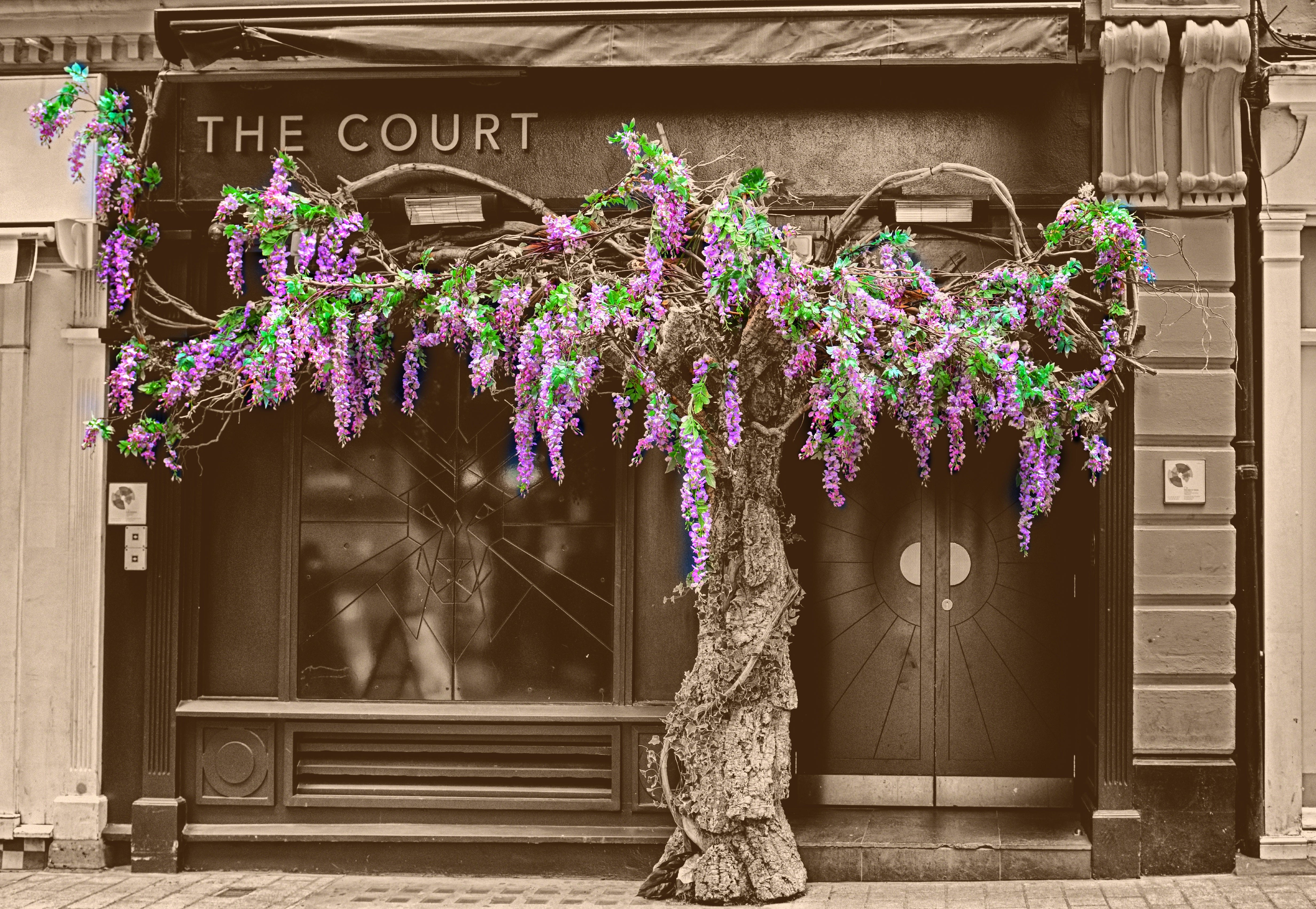
Another lovely read, thank you. I love that first pic of 9 Kingly Street. Beatiful!
Oh that’s so sad Mike. I never knew Jimmy played with Bad Manners or how he died.
And what a huge legacy he left. A great read and fab pics.