
The Beatles: Learning About Power
How Soho shaped the group’s understanding of power - and how to use it


Walk with us for a moment.
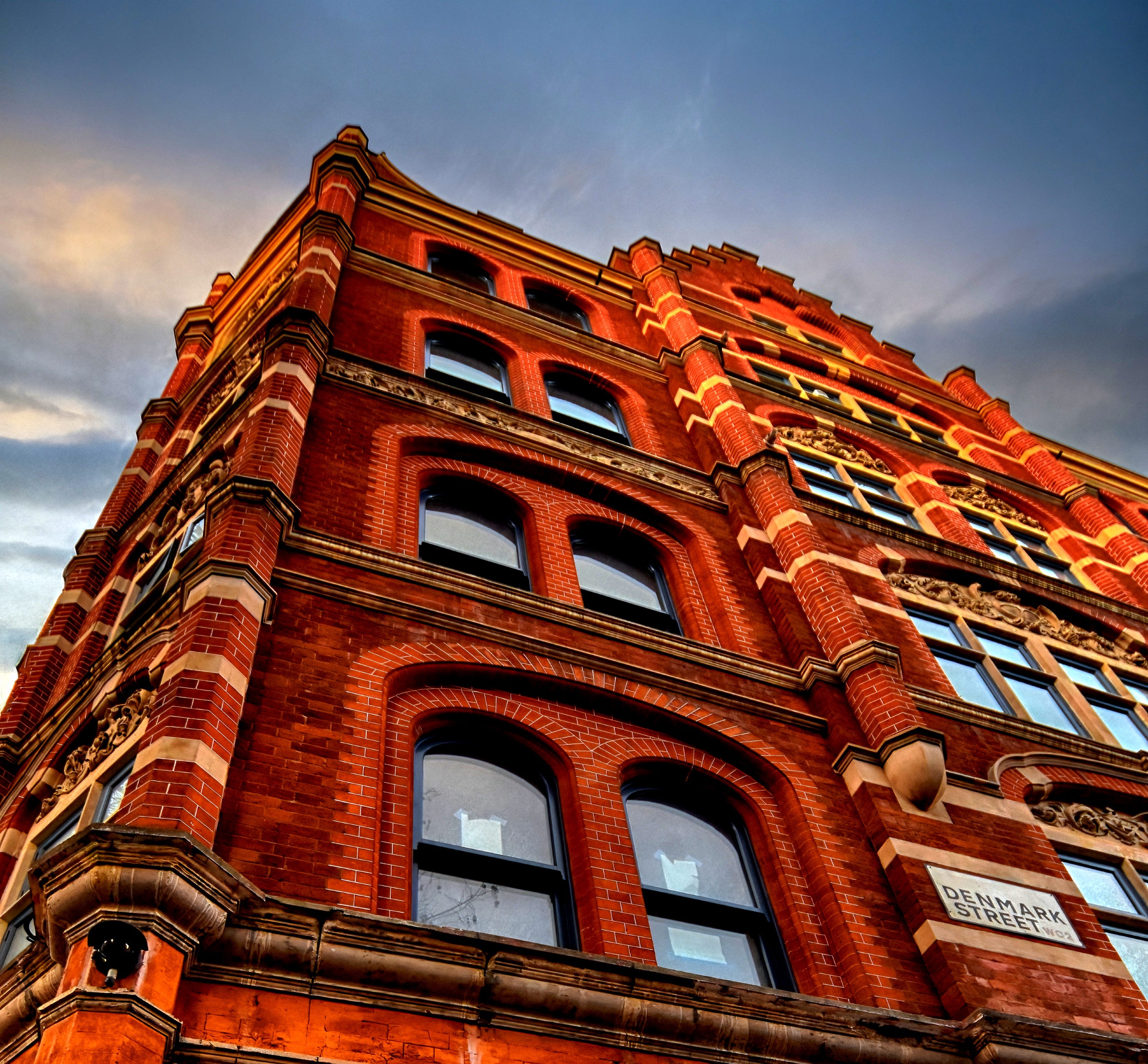
Let’s start here, just outside 132 Charing Cross Road, on the corner with Denmark Street, just down from Tottenham Court Road tube. Let’s cross the road - now mind those cars and watch out for the e-bikes. Let’s nip down Manette Street, past the little Orthodox chapel, under the Pillars of Hercules, and hang a right up Greek Street. Still with us? Good.
Here we are. Soho Square. Let’s walk around to the west side and stand outside number one. Journey over.
How long did that take us? Four minutes.
It took Paul McCartney nine years.
Mind you, there were several detours along the way, and a lot of reflection. But for McCartney it was nine years of learning how the dynamics of power worked in culture.
It was in an office in Dick James Music at 132 Charing Cross Road where, in 1962, John Lennon and Paul McCartney signed a contract establishing Northern Songs. This deal would ultimately cost them control of their own songs.
MPL Communications Ltd (short for McCartney Productions Ltd) is Paul McCartney’s media company, headquartered at 1 Soho Square from 1971. It is one of the world’s largest independently owned music publishers, owning the rights to McCartney’s post-Beatles work and a large catalogue of other composers’ music, including songs by Buddy Holly, Carl Perkins, and many standards and musicals. It also plays a quiet but crucial role in shaping, protecting and extending The Beatles’ legacy. This makes MPL both a guardian and a major modern business, handling income streams that keep McCartney’s music alive and profitable.
There is something very significant about its location.
He could have based it in Knightsbridge or Mayfair, Rotterdam or anywhere, Liverpool or Rome. But it’s in Soho. Two doors down from where a young J.M.W. Turner took his art lessons. On the route Karl Marx walked every day. In the building where Queen Victoria had her wedding shoes made. In a part of London where history is layered in surprising and eclectic ways.
When people talk about the Beatles, they tend to talk about origins and outcomes. Liverpool childhoods. Hamburg residencies. Abbey Road triumphs. American invasion. The mythology is tidy: raw talent forged by hard work, polished by genius, crowned by global fame.
What gets lost is the bit in the middle.
This is the period when the Beatles were no longer apprentices but had yet to complete a body of work that was to redefine the pop-culture universe; when they were learning faster than they were producing.
That period has a geography.
And that geography is Soho.
A place for learning
“It was just like going to school. I went to Dovedale, then I went to Liverpool Institute and then I went to The Beatles University for a bit.”
George Harrison wasn’t talking about learning how to play better, or write more expressively. He meant something deeper: an education in culture, ideas, belief systems, power, and possibility. The kind of education that comes through immersion and experience.
Soho was where that happened.
Of course, that education was not restricted to Soho. Experiences and encounters in India, the United States, Australia, Japan and elsewhere all fed into their collective learning. But our point is that in the 1960s Soho was a compressed square mile of social change and cultural power politics unlike anywhere else on Earth.
And the Beatles were right at the heart of it.
In the 1960s, Soho was not simply a scene. It was both a system and a microcosm of a changing Britain.
Within a few tightly packed streets sat the infrastructure of Britain’s cultural future: music publishers, recording studios, film editors, broadcasters, photographers, tailors, theatres, clubs, strip joints, cafés, bookshops, and informal meeting places where artists, migrants, outsiders and intermediaries all collided.
It mattered that these things were close together. You could walk from a publishing office to a studio, from a tailor to a TV rehearsal, from an editing suite to a club, in minutes. Ideas travelled quickly. People crossed paths repeatedly. Influence was cumulative.
Many historians of the period have noted that Soho functioned as a kind of compression chamber for cultural change. What might have taken decades elsewhere happened here in years. Sometimes months. Occasionally days. Britain’s loosening grip on deference, censorship and moral certainty was visible in real time, on the pavement. Sometimes this involved blood on the pavement.
The Profumo Scandal was seen as the event that triggered change in Britain. It was a knife fight at the Flamingo Club on Wardour Street that began the public unraveling of the affair between the Secretary of State for War and Christine Keeler and ultimately the fall of the Conservative government.
This was the environment The Beatles entered as they made the transition from Liverpudlians to Londoners.
They had become students at the University of South Beatles.
Learning without teachers
The Beatles didn’t arrive in Soho with a syllabus. They made their own.
What is significant is that while each of the four was experiencing broadly the same environment, what they took from that learning, how they shaped it to their own strengths, and how they applied it, was very different.
Famously, Mick Jagger described them as “the four-headed beast”, highlighting the intense bond and collective talent of the group. Their curiosity, ambition, social justice instincts and fierce intelligence helped define much of 1960s popular culture. But each Beatle found distinct ways of applying the creative insights that emerged from the collision between shared experience and individual passions and temperaments.
As writers such as Ian MacDonald and Jonathan Gould have observed, their post-touring years are marked less by stylistic continuity than by absorption: Indian music and philosophy; avant-garde sound and tape experimentation; satire, irony and non-linear storytelling; visual art, film and collage; new ideas about selfhood, politics and authority.
None of this was taught formally. It was picked up through conversations, encounters, records passed hand to hand, books recommended, films seen late at night, and experiences shared in rooms above shops. This is why small details in the music matter. A drone here. An bouzouki there. A sudden shift in narrative voice. A joke that underlines sincerity.
These are traces of learning. To listen to their songs, to really listen is to follow their journey of learning and inspiration.
The Beatles brought their creative genius to Soho. In return, Soho allowed that genius to become permeable.
Music as a field of study
Let’s take the music itself.
Before London, the Beatles’ influences were largely Anglo-American: rock ’n’ roll, rhythm and blues, skiffle, show tunes. In Soho, their listening widened dramatically.
Music from a much wider world circulated through clubs and record shops as part of Soho’s everyday hum. Greek, Middle Eastern, Indian and African sounds were present as part of neighbourhood’s soundscape. Musicians and migrants shared space. Fela Kuti played down at the Flamingo. Percussionist Jimmy Scott, born Nigerian Anonmuogharan Emuakpor, was a drinking pal of Paul’s at the Bag O’Nails club. South African township jazz played down on Gerrard Street. DJ Count Suckle brought Jamaican sound system culture to his club on Carnaby Street.
George Harrison first encountered Indian music on a film set in Teddington. He bought his first sitar at a shop just around the corner from Soho Square (the shop is now a small convenience store), then tapped into the expertise of London’s Asian Music Circle. Founded by Ayana and Patricia Angadi and based in North London, the Circle was responsible for introducing the practice of yoga to the West, and for introducing Harrison to Ravi Shankar.
London’s porous networks - records, conversations, introductions - were pursued with seriousness by all four Beatles. As with McCartney’s involvement in London’s avant-garde circles, this was not simply cultural curiosity. It fundamentally altered how their songs were constructed.
As MacDonald has noted in relation to Harrison, this wasn’t cultural appropriation in the modern sense so much as a rethinking of what pop music could structurally contain.
To return to the university analogy: this was methodology.
Ways of seeing
And then there was the art school.
One of the most overlooked aspects of the Beatles’ creative talents is their visual literacy, and how consciously it was applied. Soho housed editing rooms, film production companies, animators, photographers and broadcasters, all grappling with the new forms of mass communication. Television was becoming ubiquitous. Film language was loosening. Satire was pushing against, and then through, the limits of censorship.
From 1962, the Beatles appeared on screen. But perhaps more importantly, they learned how screens work.
Their deal with United Artists was signed at the film company’s offices just two blocks north of Soho. Their films were initially treated as merchandise: part of a package that included bubble gum cards, wigs, toy guitars, tea plates and posters. It was John Lennon’s comment that their second film made them feel like extras in their own movie that prompted them to take visual affairs into their own hands.
In 1967 they pioneered the idea of the record cover as a work of art in its own right. Conceived by the band and realised by Peter Blake and Jann Haworth, the cover of Sgt. Pepper and the music it contained cemented counterculture within the mainstream. It is a mark of their ambition that they believed they could pull off a similar intervention via mainstream television. On Boxing Day.
Magical Mystery Tour is often dismissed as an indulgent misstep. As children whose 1967 Boxing Day was transformed and enriched by the film, we strongly disagree. Seen through the lens of learning, it becomes evidence of collective development: a band testing the limits of narrative, authorship and audience expectation.
In a cutting room above a newsagent on Old Compton Street, the Beatles spliced together a film that offered insight into their worldview, threaded with satirical asides on consumerism, militarism, censorship and religion. This built on Lennon’s own television collaborations with Peter Cook and Dudley Moore, one of which was filmed in Soho’s gentlemen’s toilets. Visual approaches used on songs such as Blue Jay Way, Fool on the Hill and I Am the Walrus went on to define the template for future pop videos.
Their next film, Yellow Submarine, was more polished, coherent and influential still. Developed in Soho’s animation studios, it represented something even more radical: pop music thinking cinematically, visually and collaboratively. The Beatles themselves had little direct creative input beyond their songs, but Yellow Submarine marked a handing-on of learning. We deal with the making of this film in detail here.
Creating the film involved bussing in art school students from across London. It shaped the future of British animation and provided a vital learning experience for both students and professionals alike.
Fashion, Class, and the Body
The Beatles learned cultural semiotics in Soho by discovering how clothes function as language that signals class, allegiance, irony and intent.
Early on, they worked with Dougie Millings on Old Compton Street, whose Soho tailoring helped them move away from leather-clad rock ’n’ roll into something more ambiguous, modern and European. The collarless suits and sharp lines were not about elegance for its own sake. They reframed working-class northern musicians as contemporary, forward-looking figures without adopting the visual codes of the establishment.
Classless.
This was happening at precisely the moment Harold Wilson was reframing his Labour government in terms of the white heat of technological revolution. This was semiotics as strategy: familiar enough to be legible, different enough to be exciting.
Footwear became an equally precise signal. Through Anello & Davide on Charing Cross Road, the Beatles adopted Cuban-heeled Chelsea boots that quietly rewrote gendered and classed expectations of men’s dress. Borrowed from theatrical, continental and queer styles circulating in Soho, the boots projected confidence, sensuality and modernity without explicit statement. They were, essentially, Spanish dance shoes.
The Beatles’ boots and Harold’s Gannex raincoat pointed to a swinging new future for Britain. The point was not flamboyance, but coded deviation.
By the mid-1960s this literacy had become more playful. Tailors such as John Michael and boutiques like Granny Takes a Trip offered ways to experiment with colour, pattern and historical reference - Victorian, military, psychedelic - without settling on a single identity. In semiotic terms, they moved from wearing signs to playing with them.
This fluency fed directly into the visual language of Sgt. Pepper, Apple, and the counterculture that followed.
And we’ve not even mentioned John’s glasses yet.
Lucy in the Sky with Diamonds
The use of drugs was a fundamental element in the Beatles’ journey of creative learning. In academic terms, it was their fieldwork.
LSD in particular expanded their artistic horizons, influencing sound, structure and lyrical themes of introspection, spirituality and surrealism. Their first experience came via a visit to the Ad Lib Club, a nightclub on the fourth floor of 7 Leicester Place, above the Prince Charles Cinema in Soho. Beatles biographer Mark Lewisohn describes it as the club “most strongly associated with the Beatles”.
The band had their own table there, and according to Lennon it was one of the few places they could go without being bothered. That may explain why John and Cynthia Lennon, George Harrison and Pattie Boyd went there on 8 April 1965, after discovering their coffee had been laced with LSD at a dinner party hosted by their dentist.
It was their first encounter with the hallucinogenic drug.
As George later recalled:
“We went up into the nightclub and it felt as though the elevator was on fire and we were going into hell (and it was and we were), but at the same time we were all in hysterics and crazy.”
Alongside drugs, Soho and its clubs offered something equally important: social and cultural permeability. Actors, writers, politicians, musicians, dancers and artists moved through the same small circuit of clubs, forming a dense network in which ideas, influences and ambitions were freely exchanged.
Peter Cook — satirist, owner of Private Eye and the Establishment Club on Greek Street — was a friend and occasional collaborator of Lennon. Cook and his wife Wendy were gregarious hosts. Their guests included comedians, musicians, actors and journalists. The Lennons were among them.
In early 1967 John, Cynthia and their young son Julian were invited for lunch. Julian was drawing when John asked who it was meant to be. Julian replied: “It’s Lucy in the sky, with diamonds,” referring to Peter and Wendy’s eldest daughter.
Putting politics into pop
The Beatles arrived in London with a pre-existing political sensibility shaped by Liverpool. This underpinned their early refusal to play to segregated audiences in the United States, and their willingness to be co-opted by Wilson’s classless social liberalism. Later, both Paul and John independently were to take very public creative stands in support of Ireland’s republican movement, strongly influenced by Liverpool’s politics and their own family histories.
Soho gave this instinctive politics a new context, language and reinforcement. In 1960s Britain, questions of class, race and power were being argued openly in clubs, editorial offices and late-night conversations.
Soho also mattered because it was one of the few places in London where Black radicals, anti-imperialist thinkers, artists, journalists and musicians routinely crossed paths. For John Lennon in particular, this environment deepened and complicated his politics. Through London’s informal networks he encountered figures such as Michael X, a controversial Black Power activist, and Tariq Ali, a leading voice of the New Left who was a visible presence in London’s political culture, and thankfully still is.
Soho turned politics from inheritance into exchange.
The key learning was how politics operates culturally. Satire mattered as much as slogans. Media mattered as much as marches. Power could be challenged symbolically as well as directly.
Lennon’s later political work through interviews conducted in bags, bed-ins, acorns posted to world leaders, and a letter to the Queen returning his MBE, all reflect this learning. Politics conducted through visibility, irony and provocation. Politics that seek to subvert capitalism’s mass media.
Like all students, each Beatle found his own way.
Learning about power
Which brings us to perhaps the most crucial part of their education.
Yes, their time in and around Soho taught them about diverse cultures, about ways of seeing and creating, about drugs and perception, about the politics of protest. But it also taught them about power.
Nowhere is this clearer than in the story of Northern Songs. The Beatles became wealthy but not powerful. They wrote the material but did not own it.
This of course was standard practice. Soho made that practice visible. As they journeyed - temporally and geographically - from one side of Soho to the other, they sought to actively challenge and replace that practice. This lesson led to Apple, and eventually to McCartney’s later business arrangements.
If Soho was a university, this was a compulsory module that led to postgraduate specialist study.
For The Beatles, Soho shifted in their perception from ‘a scene’ to a dense, walkable map of who controlled what: where the power sits. When they started on their London journey in 1962, power sat in rooms.
It was in a second-floor office on Charing Cross Road that they signed away control of their songs in a music publishers. It was in a nearby office on Denmark Street that Alan Smith interviewed them for their first feature in the NME. It was in a room at the BBC on Regent Street where they signed up to do their first live radio performance.
Deals were made face to face, quickly, generally without lawyers and usually without the artists having a clue about long-term implications. Soho taught them that: Fame is visible. Power is hidden.
The industry rewards talent with cash, but reserves power for ownership.
It took time, and the death of their manager and Brian Epstein, to act on this knowledge. In the meantime there was a dimension of power they could control: the power of the image.
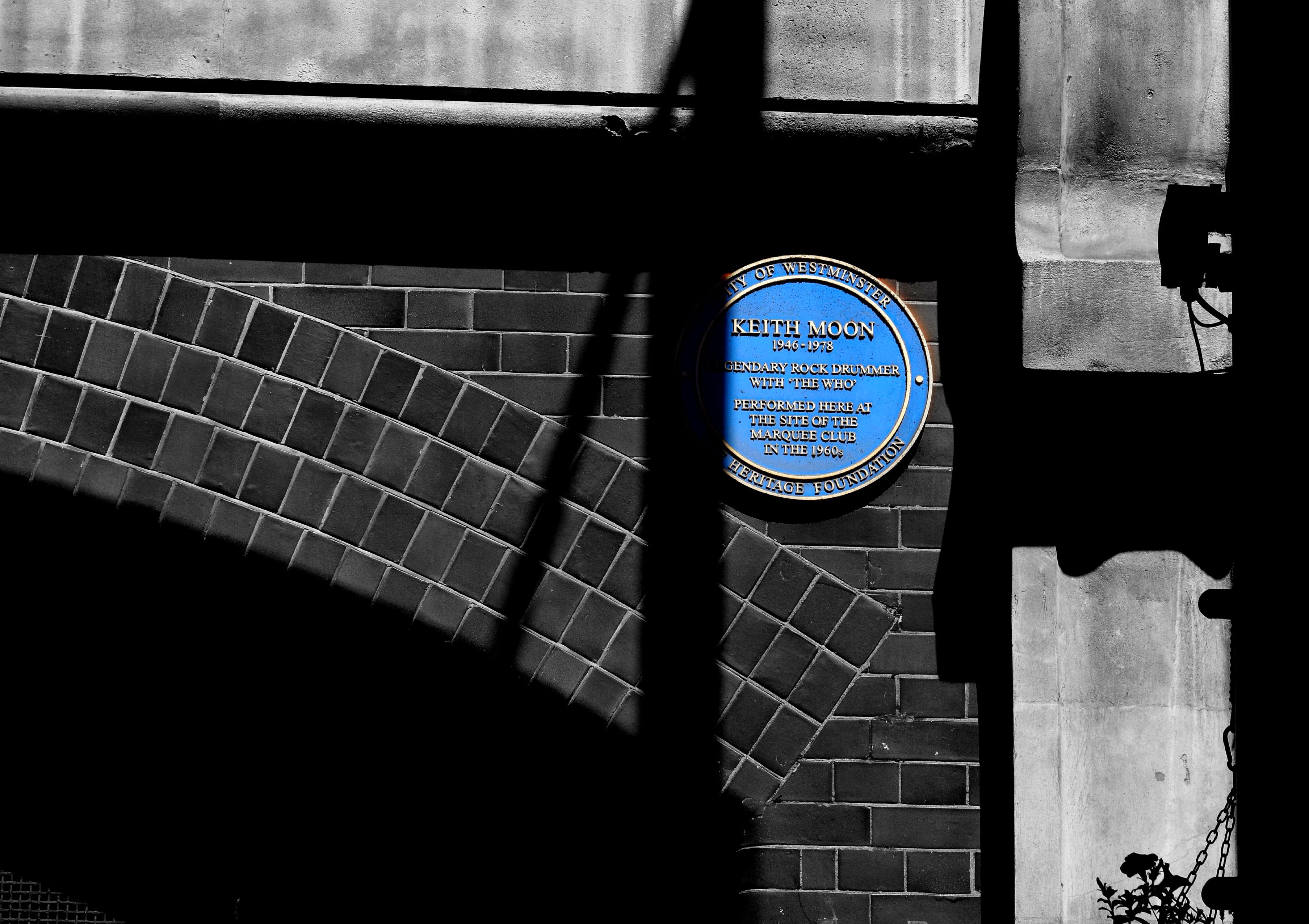
A blue plaque on 15 Poland Street marks the building where the poet Shelley lived in 1811. One hundred and fifty-one years later, in 1962, Tony Calder Enterprises occupied the top floor. Calder, an eighteen-year-old DJ, had recently left his job in Decca Records’ press department to become an independent publicist and promoter.
That September, just weeks before Love Me Do was set for release, Brian Epstein enlisted Tony Barrow to produce a press kit and coordinate a publicity campaign. Barrow, who would later work for The Beatles from 1963 to 1968, was still employed by Decca at the time. To avoid detection by his bosses, he funneled the project through Calder’s office. For the press kit, Tony Barrow coined a phrase that stuck: the Fab Four.
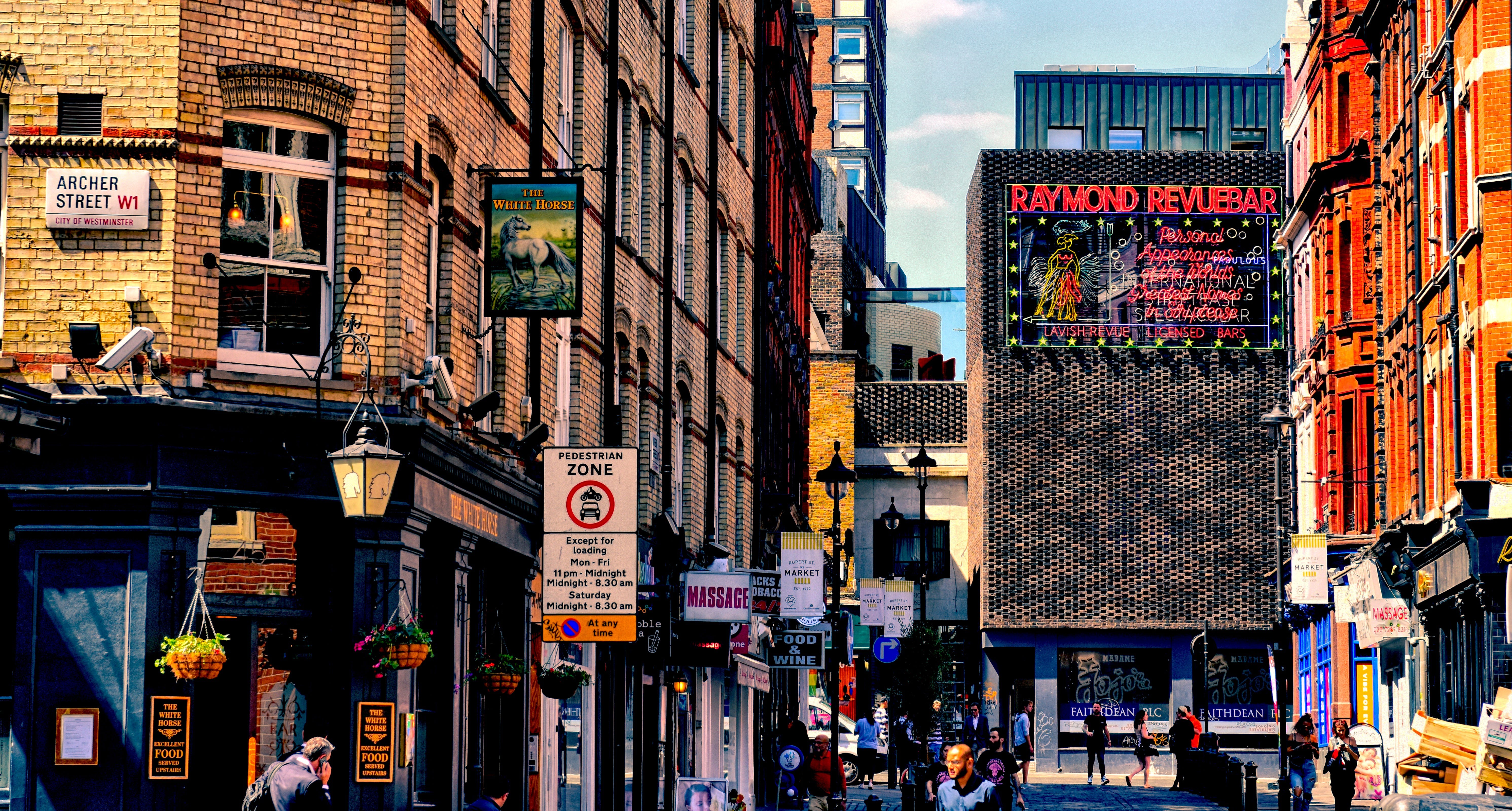
Booted and suited by Anello & Davide and Dougie Millings, their image was completed by Dežo Hoffmann, the first professional photographer to work regularly with The Beatles. An iconic photograph of the group was taken on Rupert Court, a narrow alleyway between 27 and 29 Wardour Street, just below Hoffmann’s studio, where many of the band’s early photos were taken.
They learned quickly that fashion, photography and well crafted copy could open doors, neutralise class barriers and generate cultural power. And the most important door was a two minute walk from Soho.
The BBC transformed the Beatles into a national cultural force, and then a shared public experience. Between 1963 and 1965 they appeared on 52 radio shows, performing 88 songs across 275 tracks. Airplay conferred legitimacy. The BBC signalled that this was not just a teenage fad, but something the nation was expected to pay attention to.
Television amplified this. Appearances on programmes such as Top of the Pops and, most famously, the Royal Variety Performance in 1963, embedded the Beatles in Britain’s national culture.
The Royal Variety moment mattered not just because of Lennon’s irreverent remark, but because it demonstrated how the Beatles could operate within establishment media while subtly unsettling it. The BBC’s reach meant that irony, accent, humour and class were transmitted intact. This was not simply exposure; this was cultural revolution. And it was the BBC that transmitted this to the world.
In learning how to work with the BBC, the Beatles learned how modern cultural power operates. They became not just global superstars, but the first to understand global media dynamics. Lennon’s “bigger than Jesus” controversy was a difficult lesson, but one later applied in his peace campaigning with Yoko Ono.
Apple was their attempt to apply everything they had learned: to reclaim ownership, collapse hierarchies, and control output and image. It had intellectual coherence but organisational chaos. We describe it more here.
That chaos reflected the different conclusions each Beatle had drawn. Ringo valued community. George sought mentorship and spiritual purpose (and a recent post by Jules shows how he applied this post-Beatles). John resisted power as constraint. Paul understood power as something to be mastered.
Ownership, he learned, is the only durable form of cultural power.
MPL Communications Ltd, headquartered at 1 Soho Square, embodies that lesson. It is not a museum, but a living business. And a very successful one. If early Soho was where McCartney learned how the system worked, 1 Soho Square is where he mastered it.
What Soho ultimately taught them was that power is spatial before it is abstract. It lives in rooms: offices, studios, boardrooms. In the early 1960s, those rooms were clustered tightly together: walkable, legible, knowable. Power could be stumbled into, signed away, glimpsed through half-open doors. Over time, that power moved. It became more dispersed, more legalised, more invisible, encoded in contracts and corporate entities. The Beatles learned this the hard way. Apple was their attempt to redraw that map. MPL was the lesson finally absorbed. What began as an education in a place ended as an understanding of a system.
Walking their journey
Street by street, you can trace how The Beatles moved from ignorance to mastery. You can see how creativity and commerce grew side by side, often in tension. How social change provided both opportunity and friction.
Most Beatles tours tell you where things happened. Our guided walk on 5 April explores the issues we’ve sketched out above and asks why they happened here and why they unfolded the way they did. We’ve been running guided walks of Soho for four years, and this is the first one we’ve done themed on The Beatles.
The modern music industry, with its emphasis on rights, branding, cross-media presence, and intellectual property, owes as much to lessons learned by The Beatles as it does to the music itself. So does our broader culture. We still live with the tension between creativity and control; between experimentation and monetisation; between learning and ownership.
Popular music is a conflicted territory. Especially today.
The Beatles learned how to navigate it over half a century ago, and today we have much to learn from their experience. There is no inevitability that AI will serve us cultural slop, or that corporate interests will dictate our creative future. Unless we let them.
Time to come together.
The button above will take you to a webpage that gives you more details of our walk. You’ll learn more about the free full colour souvenir map, the free playlists and the drink in the pub at the end of it! Free to attend - donations invited to Centrepoint Homeless Charity.
Sources used
The Beatles (2000) Anthology. London: Cassel & Co
Epstein, B. (1964) A Cellarful of Noise. London: Souvenir Press.
Gould, J. (2007) Can’t Buy Me Love: The Beatles, Britain, and America. New York: Harmony Books.
Lewisohn, M. (1988) The Complete Beatles Recording Sessions. London: Hamlyn.
Lewisohn, M. (2013) Tune In: The Beatles: All These Years, Volume One. London: Little, Brown.
MacDonald, I. (1994) Revolution in the Head: The Beatles’ Records and the Sixties. London: Pimlico.
Miles, B. (1997) Paul McCartney: Many Years From Now. London: Secker & Warburg.
Norman, P. (2005) John Lennon: The Life. London: HarperCollins.
Sandbrook, D. (2005) Never Had It So Good: A History of Britain from Suez to the Beatles. London: Little, Brown.
Wilson, H. (1963) ‘Labour’s plans for the white heat of technology’, speech to the Labour Party Annual Conference, Scarborough, 1 October.
I feel as if I've just eaten a "full English" with all the trimmings!
Glorious piece. Reading all of your posts it is clear that Soho is/was a kind of Bermuda Triangle in reverse. A hyper-fertile area, culturally speaking. Reading this particular post, it occurs to me that it may have influenced the Beatles' rapid rise to some extent, after all, it must have been a wildly stimulating place for them to be, given their capabilities.
I loved "Magical Mystery Tour", the album and the film. When I was a kid one of the posters on my bedroom wall was of the four of them walking down the stairs wearing their white suits.
Musically speaking, George seemed to have the capacity to make lemonade out of lemons - I rather like "Only a Northern Song "from Yellow Submarine!
A marvellous read with beautiful pics as usual, and ta so much for the mention! 💛
Fantastically comprehensive. So disappointed that I can’t do the walk (clashing date) now that I know about it. Next time!